Showing posts with label desert wildflower. Show all posts

Sunday, February 26, 2012

'Popcorn' Flower

Another type of 'popcorn' flower.  This one is much more along the line of the fiddleneck with the curved stem and flowers all in a row.
Side view 

Here's this 'popcorn' flower out of focus and another interesting tiny flower next to it called a stickle leaf.
 The flower is blurry, but the stickle leaves are easier to see.


Here's the other 'popcorn' flower.  Note the long leaves and long stems and open structure as opposed to the smaller bunch in the one above.

Saturday, February 25, 2012

Flower & Seed

I don't know the name of this tiny, nettly flower other than to call it a 'popcorn' flower. (I could look it up, I suppose). They are very small and even in large numbers are easily overlooked.
 Tight cropping shows the nettles are sometimes bigger than the flower itself.

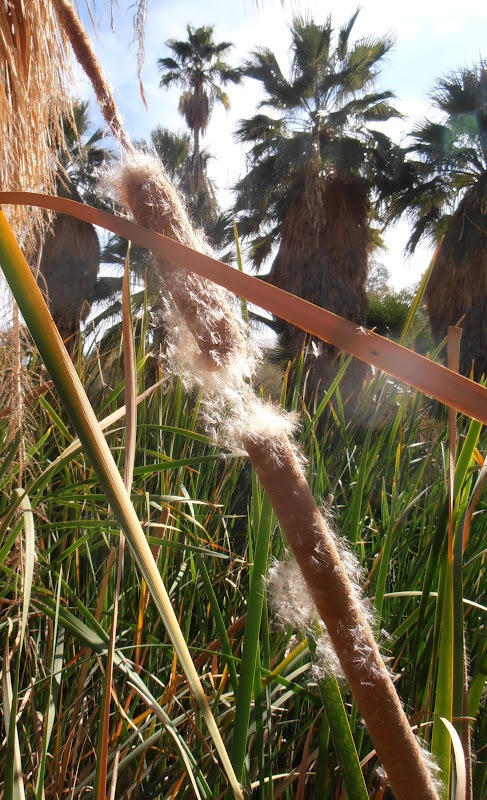
This cattail seed head was well over one foot long. I broke it open a little bit.  

Coulter's Lupine blooming at Echo Canyon.
Closer up...

Brittle bush looks like it is growing on the rock.
Closer up you can see the large crack they are growing in.
And a closer shot of the flowers.  Related to the sunflower, each flower head has numerous flowers on it.

Seed of the desert broom all ready to fly off to start new brooms.

Chuparosa bush is often visited by hummingbirds, but this one only had bees buzzing around.


Greythorn fruit beginning to ripen.

Wednesday, March 24, 2010

New Flowers

I may overdo it a bit in the spring with my flower pictures, but I almost always see new things or better shots or something to keep me coming back for more. This year, there are some different flowers among the old standards at the Desert Botanical Gardens.

Nice displays of color with the orange poppy, african violet and firecracker penstemon (all standard).


Nice mix of flowers & cactus (stabdard).


Firewheel flower (standard)


New - I don't know what it is.


Owl's Clover (standard)


Don't know, but I like it.


Don't know this one either, but I really like it!


A kind of paperflower?


A tiny cluster on a fairly good-sized shrub. I'm sure I've photographed this before, but I don't recall the pictures coming out so well.


I don't know if this one is new as much as there were so many more of them out this year. Nice ones.

Saturday, April 18, 2009

Santa Rita

Purple Prickly Pear, or Santa Rita. I'm sure there are a good number of varieties of this. I know I have seen several. The flowers were wide open and begging for someone to take pictures of them.

And the close up

Tuesday, April 14, 2009

Penstemon

There are quite a variety of penstemon out there and all will do fairly well out here in a landscaped setting, the only native here is the Perry's penstemon. (I think there is another desert native, but not found in our neck of the desert). In fact, perhaps because of the large leaves, you don't find many truly wild penstemon around.
Close up...a real hummingbird attraction.


Lupine

'You mean the flower lupine?' Sorry couldn't resist a bit of Monty Python humor. If you haven't seen it, you woldn't get it, but a very funny skit.

Anyhow, the flower lupine. Or Coulter's Lupine, if you prefer to be more exact. Grows very small unless well watered or in a nice shady spot (and fairly-well watered). Close up...a very interesting shape.
And ones well-watered. In the foreground are seed pods growing along the stems. The seeds look like pebbles; a good means of survival, I would think.

Tobacco - Desert Style (2)

Yes, two varieties of tobacco grow in the desert. This one is the Desert Tobacco. It is much more of a low-lying shrub than the Tree Tobacco. The stems and leaves have nettles for protection.
Here are a bunch of flowers on slender stems.
A close up...

And here are a couple of beetle larvae that seemed to be all over this plant. I don't know what they will become.

Tobacco - Desert Style (1)

Not a big fan of tobacco, but it is an interesting plant. The natives used these plants for smoking and incense. Like any tobacco plant they are somewhat poisonous.


Tree Tobacco can begin to look like a tree and I've seen them well over 6' tall. In fact this one is probably over 8' tall in this wash. Not really much of a tree, just tall like a young tree. Certainly more tree-like than shrub-like, I guess.


Here is a cluster of the tubular flowers

A close up...


Here are some of the leaves. You can see one dead and drying on the plant while another is on its way there.

Monday, March 30, 2009

Rock Escheveria

A hike up South Mountain Park's Kiwanis Trail (and then across the road and up a short ways) will get you along side a few of these Escheverias. They aren't very big - the largest I saw was only about 4" across, though I have seen them something close to 8"

Flowers on stalks

Trailing 4 O'Clock

A hearty survivor, at least this particular plant, I have seen this flower over the years at pretty much the same place in South Mountain Park for well over 10 years. Obviously a low-lying plant with a small flower.
Closer up it looks as though the leaves are thick with dust, and that may be the case after the big winds we had last Thursday.

Tuesday, March 10, 2009

Brittlebush

Give them water and brittlebush can grow into a pretty large shrub, but normally it doesn't get much bigger than 3' x 3'. The flowers grow on long, thin stalks atop the plant. The flowers are some of the larger desert wildflowers and usually quite numerous on any given bush.

You can see how thin the stalks are here.

And a closer look:

Almost forgot to mention; the name 'brittlebush' is due to the brittle nature of the branches which snap off easily.

Sunday, March 8, 2009

Fiddleneck

There are other flower with a similar spiral, but they are usually somewhat smaller than the fiddleneck. The size varies from barely above ground to past the knee depending on location, rainfall and temperatures.
Tiny, yellow, trumpet-shaped flowers appear toward the top of the spiral which continues to unfurl as the plant grows. Hairy nettles appear on the stems, the leaves and the base of the flower (and eventually the seed casing). They help protect the plant from most predators - at least the larger ones.
A super-close shot.